
What the WHI Study Really Showed About Hormone Therapy and Why It Was Misunderstood for 20 Years
In 2002, a single headline changed the lives of millions of women. Hormone therapy was declared dangerous. Within a few months, thousands of doctors around the world stopped prescribing it, and women, in a panic, stopped taking their medications.
It was the Women’s Health Initiative (WHI) study, one of the largest studies in the history of women’s health. The data from this study were indeed real, but they were interpreted incorrectly. And now, two decades later, many experts finally agree that the conclusions were applied much more broadly than the data themselves warranted.
What Was the Women’s Health Initiative (WHI) Study?
The Women’s Health Initiative was a randomized controlled trial launched in the United States in the 1990s. Its goal was to determine whether long-term hormone therapy protects women from chronic diseases, particularly heart disease.
At the time, the scale was simply enormous: more than 161,000 women participated in the study, and the hormone therapy arm alone included over 27,000 participants nationwide. Even by modern standards, this remains one of the largest clinical trials in medicine.
Why the Study Was Conducted
For decades, doctors believed that hormone therapy protected the heart. But this belief was based mainly on observational data, rather than on rigorous randomized trials. Scientists finally wanted a definitive answer: Do hormones actually reduce the risk of cardiovascular disease, or is it just a coincidence?
Who Participated in the Study
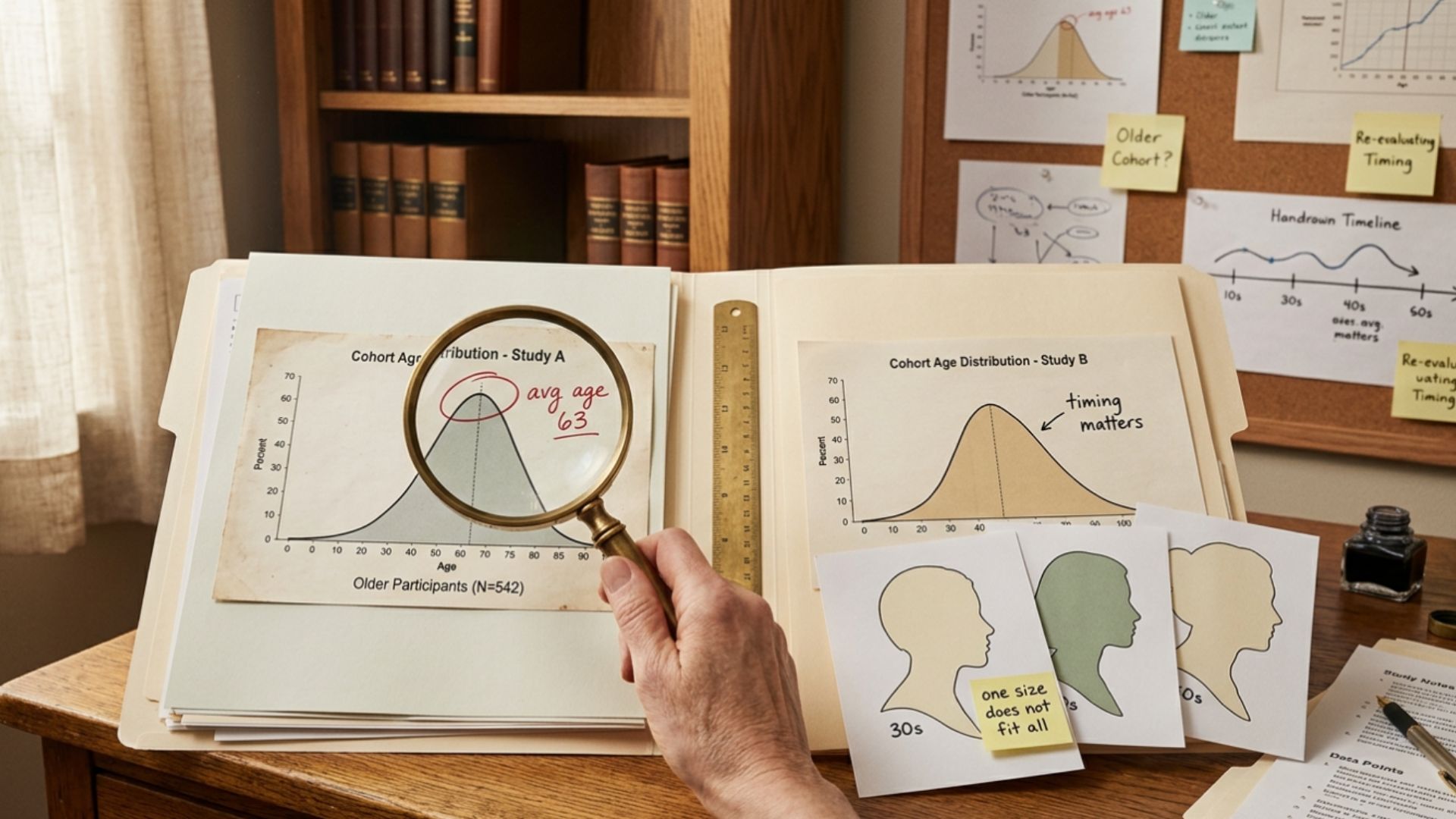
The participants were women aged 50 to 79. The average age at the start of the study was about 63 years. This fact seemed like a minor detail, but it later turned out to be one of the key points of the entire story.
The Original WHI Study Conclusions
The results of the WHI study on menopause, published in 2002, were unexpected: the overall risks of combined hormone therapy (estrogen plus progestin) outweighed the benefits. These were the official WHI study conclusions. An increased risk of heart disease, stroke, venous thrombosis, and breast cancer was observed.
How the Headlines Changed Menopause Care
The reaction was immediate. Within a few months, the number of women using hormone therapy had nearly halved. This change in practice occurred, without exaggeration, overnight.
Public Perception vs. Scientific Findings
The problem is that a complex, multifaceted study was reduced in the public consciousness to a single phrase: “hormones are dangerous.” There were no clarifications regarding age, the timing of therapy initiation, or specific drug formulations. People simply took the general conclusion and applied it to all women without exception.
Why Many Experts Believe the WHI Findings Were Misinterpreted
It’s important to clarify right away: the issue isn’t that the WHI study was “wrong.” The issue is that its results were generalized much more broadly than the sample of participants itself allowed.
The Importance of Participant Age
This is a key point in the WHI study on hormone replacement therapy. The average age of the participants was 63, which means many of them had been in menopause for more than ten years - it’s far older than most women we'd consider starting MHT today. But age wasn’t the only difference. Many of the participants were unhealthy at baseline: overweight, hypertensive, or smokers - a profile very different from the women now seeking hormone therapy.
And critically, the medications used were not what we use today. The study relied on conjugated equine estrogens (compounds that our own bodies don’t produce) delivered orally, which carries a significantly higher risk of causing blood clots. They also used synthetic progestins rather than bioidentical progesterone.
At Tahoe Hormone Therapy, we use bioidentical estradiol and progesterone, no oral estradiol, and no synthetic progestins. These distinctions matter enormously, and they’re exactly why the WHI’s conclusions cannot simply be applied to modern hormone therapy.
One Size Does Not Fit All
The decision regarding therapy cannot be a one-size-fits-all rule. Age, health status, time since menopause, and the type and method of hormone administration - each of these factors alters the balance of risks and benefits. The “one-size-fits-all” approach turned out to be just as flawed as the “one-size-fits-all” approach that prevailed before 2002.
What Later Research Revealed
After the initial wave of panic, a long period of re-evaluation of the data began, revealing a completely different picture.
Reanalysis of WHI Data
A reanalysis of the WHI results, broken down by age group, revealed something important: among women aged 50-59 who began therapy shortly after the onset of menopause, cardiovascular risk either remained neutral or decreased. In women over 70, on the other hand, the risk did indeed increase. This phenomenon has been termed the “timing hypothesis” - that is, when you start treatment is just as important as what you take.
New Insights Into Risk and Benefit
Following further observations, the simplistic question “Are hormones dangerous or not?” is no longer relevant; more precise questions are now being asked: for whom, when, and in what form. Long-term follow-up of WHI participants for up to 18 years also showed no difference in cardiovascular mortality between the therapy and placebo groups overall across the entire sample.
How Hormone Therapy Recommendations Have Changed
Since 2002, recommendations for menopausal therapy have come a long way: from a complete rejection to a balanced, personalized approach.
A Personalized Approach to Care
Today, doctors take into account the severity of symptoms, the patient’s age, medical history, time since menopause, and personal treatment goals. Modern hormone therapy is an individualized approach for each woman that takes into account all the risks and benefits for that specific person.
What Women Should Know Today
If you follow menopause news, you’ve probably noticed that the tone of the conversation about hormone therapy has changed significantly in recent years. This is because medical professionals have begun to reevaluate the research findings.
The main practical takeaway is that age and the timing of therapy initiation matter. Treatment decisions should be made on an individual basis, in consultation with a doctor who understands your medical history, symptoms, and specific situation.
At Tahoe Hormone Therapy, that’s exactly how the first appointment is structured: with a comprehensive hormone panel, a review of your medical history, and a personalized treatment plan.
FAQ
What did the WHI study actually show?
The WHI study showed that, on average, among women aged 63, combined hormone therapy was associated with an increased risk of several diseases. However, these findings are not easily applicable to younger women who have recently entered menopause.
Why did the WHI results spark so much controversy?
The complex data from the WHI menopause study were oversimplified into the general conclusion that “hormones are dangerous,” without taking into account the participants’ ages or the timing of therapy initiation.
Did the WHI conclusions change after reanalysis?
Yes. A reanalysis by age group showed that the risks for women aged 50-59 differed from those for women over 70; this is the essence of the WHI study’s conclusions, which were refined years later.
Can the WHI results be applied to all women?
No. One of the main lessons from the WHI study on hormone replacement therapy is to move away from a one-size-fits-all approach in favor of an individualized assessment of risks and benefits.
How are decisions about hormone therapy made today?
Based on a personalized analysis: age, symptoms, health history, and time since menopause, not on general headlines from the past.
This article is for educational purposes only and does not constitute medical advice.